

For simulation to deliver measurable performance gains, the hardware configuration must replicate real-world kart ergonomics, steering load and chassis feedback with near-perfect accuracy. Professional drivers, race academies and development programs therefore prioritise precision over aesthetics.
Below is an overview of the hardware standards typically used in professional kart simulator training environments, particularly within high-performance platforms such as KartSim.
Direct Drive Steering Systems
Kart steering is entirely mechanical. There is no power assistance, and steering load varies significantly with speed, tyre grip and chassis balance.
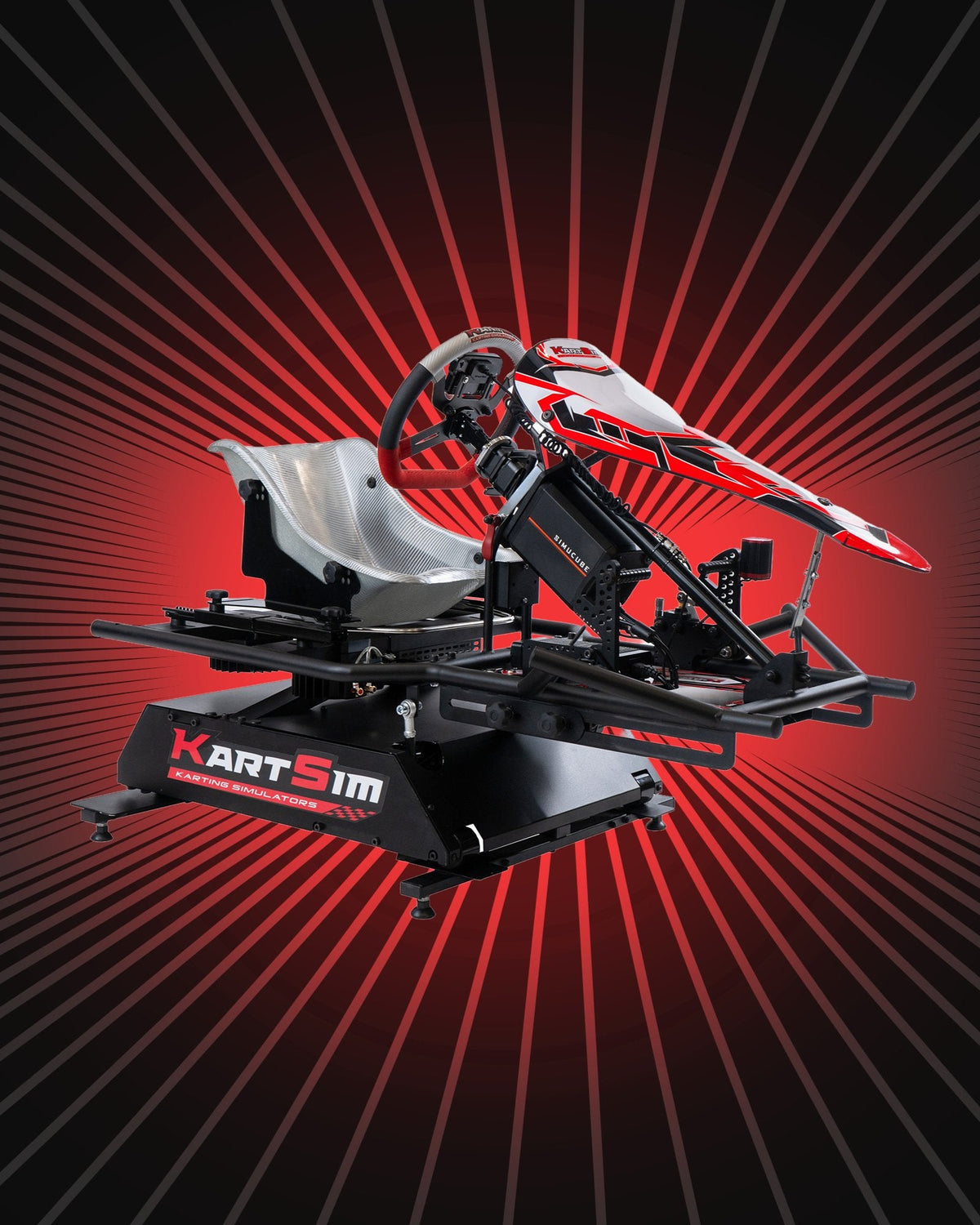
Professional setups therefore use high-torque direct drive wheelbases, most commonly from manufacturers such as Simucube, which is installed on the KartSim Pro Simulator.
Key reasons include:
- Immediate torque response with no belt or gear delay
- High peak torque capacity to replicate realistic steering weight
- Detailed self-aligning torque feedback
- Accurate communication of rear rotation and grip limit
This level of steering feedback is essential for training:
- Turn-in timing
- Mid-corner corrections
- Steering rate discipline
- Oversteer management
In driver development, steering feedback must reinforce correct inputs. Any artificial smoothing or latency compromises training value.
Real Kart Steering Geometry
Professional kart simulators use real kart-style steering rims rather than GT or formula-style wheels.
The objective is not visual realism but biomechanical accuracy.
Correct steering geometry ensures:
- Authentic hand positioning
- Correct steering leverage
- Proper rotation range
- Transferable neuromuscular patterns
For competitive drivers, muscle memory must translate seamlessly from simulator to circuit. Any deviation in rim shape or rotation characteristics introduces unnecessary adaptation. That’s why you can see a real kart wheel fitted to our KartSim Pro Simulator models.
Load Cell Pedal Systems
In karting, throttle modulation and braking stability define lap time consistency.
Professional simulator setups therefore use:
- High-resolution throttle sensors
- Force-based load cell brake systems
- Fully adjustable pedal positioning
Load cell braking replicates real-world force application rather than travel-based input. This supports:
- Progressive brake pressure development
- Stable trail braking
- Repeatable braking points
- Reduced rear instability under deceleration
For driver academies and structured coaching programs, the accuracy of pedal-feel is fundamental to building consistent performance metrics.
Authentic Seating and Driver Position
Seating geometry is frequently underestimated in lower-tier simulator builds.
Professional kart simulators integrate authentic kart seating positions, often using seats from manufacturers such as Tillett - which is what is used on our KartSim Pro Simulators.
Critical elements include:
- Accurate hip angle
- Realistic pedal reach
- Correct steering column height
- Appropriate torso recline
Driver posture influences steering leverage, braking force application and upper-body load response under simulated deceleration.
For performance-oriented users, incorrect seating geometry reduces the simulator’s ability to reinforce real-world driving habits.
Motion Systems with Traction Loss
At advanced levels, motion systems are integrated to simulate load transfer and rear rotation.
Professional configurations typically incorporate:
- 3 Degrees of Freedom (3DOF) motion
- Rear traction loss mechanisms
- Accurate longitudinal and lateral load simulation
This enables drivers to train:
- Weight transfer perception
- Brake-induced load shift
- Rear-end rotation timing
- Oversteer correction reflexes
While motion is not a replacement for real track testing, it significantly enhances limit behaviour training when combined with life-like physics.
High Refresh Visual Systems and Telemetry Integration
Professional kart simulation environments prioritise:
- 144Hz or higher refresh rate displays
- Low input latency
- Clean, distraction-free visual presentation
When operating within physics platforms such as rFactor 2, high refresh rates improve timing precision and visual stability during rapid steering corrections.
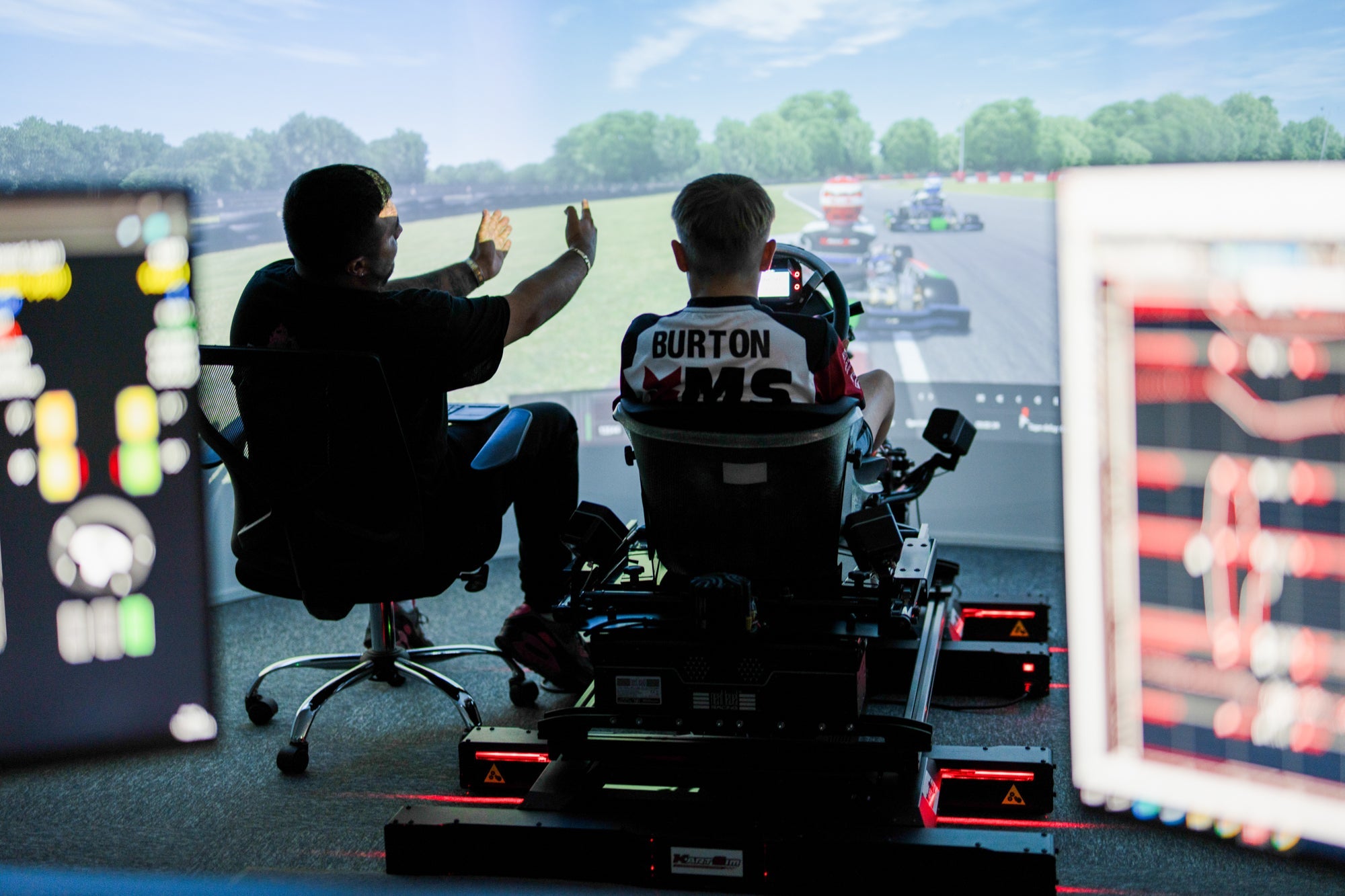
Equally important is telemetry integration. Professional driver training environments rely on:
- Brake and throttle trace analysis
- Delta comparison tools
- Consistency tracking
- Structured coaching feedback
Simulation becomes a measurable performance environment rather than a subjective experience.
For serious drivers and teams, this configuration is not excessive. It is necessary to ensure that simulator training contributes directly to measurable improvements in race performance. In high-performance karting, realism is not a marketing feature, it is a development requirement.



Share:
Why Most Karting Simulators Make You Slower in Real Life?
Are There Kart Simulator Brands That Provide Remote Diagnostics and Technical Support?